


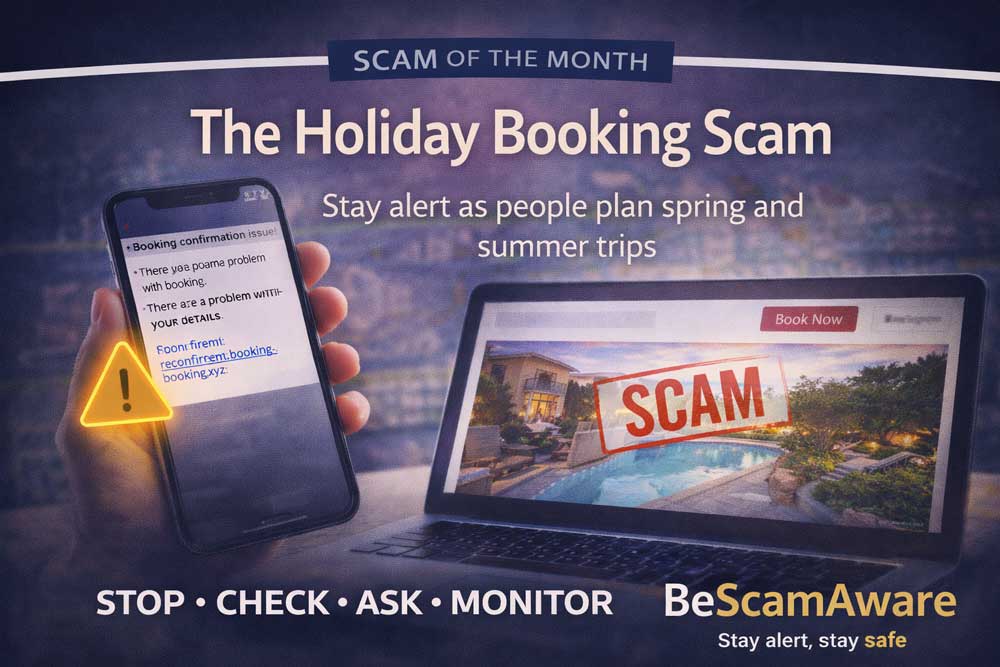

The Holiday Booking Scam
As the weather starts to improve and Easter approaches, many people begin planning holidays, weekend breaks and summer trips. Flights are booked, hotels are reserved and excitement builds.
Scammers know this is the time people are spending money on travel, and they take advantage of that.
Holiday booking scams increase in spring and early summer, when people are actively searching for deals, accommodation and last-minute getaways. These scams often look completely genuine and can be difficult to spot until money has already been sent.
How the holiday booking scam works
Holiday scams usually begin with a deal that looks attractive but believable. It might be a discounted hotel room, a holiday cottage, an apartment rental or even a caravan or lodge booking.
Sometimes the listing is completely fake. Other times, scammers copy real listings and repost them elsewhere with slightly lower prices to attract interest. Communication often moves away from official booking platforms and into email, text or messaging apps, where the scammer asks for a bank transfer to secure the booking.
In other cases, people receive emails that appear to come from well-known booking websites, asking them to confirm payment details or re-enter card information because there has been a “problem with the booking”. These emails lead to fake websites designed to steal payment information.
By the time people realise something is wrong, the property doesn’t exist, the booking isn’t real, or their card details have been stolen.
Why this scam is so effective
Holiday scams work because people are excited, distracted and often trying to secure a good deal quickly. When planning a trip, people are comparing prices, checking locations and managing dates, so a message about a booking or payment doesn’t feel unusual.
Holiday booking scams don’t work because people are careless, they work because people are excited, busy and trying to organise something enjoyable. Scammers take advantage of normal behaviour.
The excitement of planning a trip
When people are planning a holiday, they are thinking about flights, activities, restaurants and time off work. The focus is on the trip itself, not on security. If a message arrives about a booking confirmation, payment issue or accommodation availability, it feels like part of the normal process. People are less suspicious because they are already in a “holiday mindset” and expecting travel-related emails and messages.
Scammers know this and time their messages to look like part of the booking journey rather than something unusual.
The pressure to secure dates quickly
Holiday accommodation and flights often sell out, especially during school holidays, bank holidays and summer months. People are used to seeing messages like “Only one room left” or “Price increases in 2 hours”.
Because this pressure is normal in the travel industry, scammers use the same language. They may say someone else is interested in the property, the booking will be cancelled if payment isn’t made today, or the price will increase if you don’t confirm immediately.
This creates urgency and reduces the chance that someone will stop and double-check before sending money.
Trust in familiar booking websites
Many people use well-known booking platforms and assume anything that looks like it comes from those companies must be genuine. Scammers copy logos, colours, layouts and email formats so their messages look like they come from legitimate booking websites.
People might receive a message saying there was a problem with their payment or that their booking needs to be reconfirmed. Because they recognise the brand name, they click the link without thinking twice, not realising the website is fake.
Scammers rely heavily on brand recognition and familiarity.
The appeal of saving money
Holiday costs can be expensive, so when people see a slightly cheaper option for the same location or property, it feels like a good find. The price is often not unbelievably cheap, just cheaper than similar listings, which makes it look like a genuine deal rather than a scam.
People may think they are booking directly with the owner to avoid platform fees, or securing a last-minute cancellation deal. The idea of saving money makes people more willing to accept unusual payment methods like bank transfer instead of paying through the official platform.
When something feels like part of the normal booking process, people are less likely to question it.
People being busy and not checking details carefully
Booking a holiday often involves comparing multiple websites, checking reviews, organising travel dates and coordinating with family or friends. People are multitasking and making multiple payments around the same time, including flights, accommodation, car hire and activities.
In this busy environment, it’s easy to click a link quickly, assume a message is legitimate, or not look closely at a website address. Scammers rely on people being distracted and making quick decisions rather than careful ones.
Most scams don’t work because people don’t know about scams.
They work because people are busy, distracted and expecting normal transactions.
The warning signs to watch for
Be cautious if someone asks you to move communication outside of a booking platform, especially if they request payment by bank transfer rather than through the official website.
Watch for emails or messages saying there is a problem with your booking and asking you to click a link to confirm your payment details. Always go directly to the official website instead of using links in messages.
If a deal looks significantly cheaper than similar properties in the same area, there is usually a reason. Scammers often rely on prices that feel just cheap enough to be tempting, but not so cheap that they look obviously fake.
Protect yourself with Stop · Check · Ask · Monitor (SCAM)
STOP
Take a moment before sending money or entering payment details. Scammers rely on urgency and excitement.
CHECK
Only use official booking websites and payment systems. Avoid bank transfers for holiday accommodation unless you are certain the provider is legitimate.
ASK
Ask the property owner questions, search the property online, and consider whether the deal makes sense compared to other listings.
MONITOR
Keep an eye on your bank and card transactions after booking holidays online. If anything looks unusual, contact your bank immediately.
A final reminder this April
Scammers don’t book holidays.
They book opportunities to take your money.
If a booking asks you to leave the platform, pay by transfer, or click a payment link, pause before continuing.
BeScamAware – Stay alert, stay safe.
Stop · Check · Ask · Monitor
