


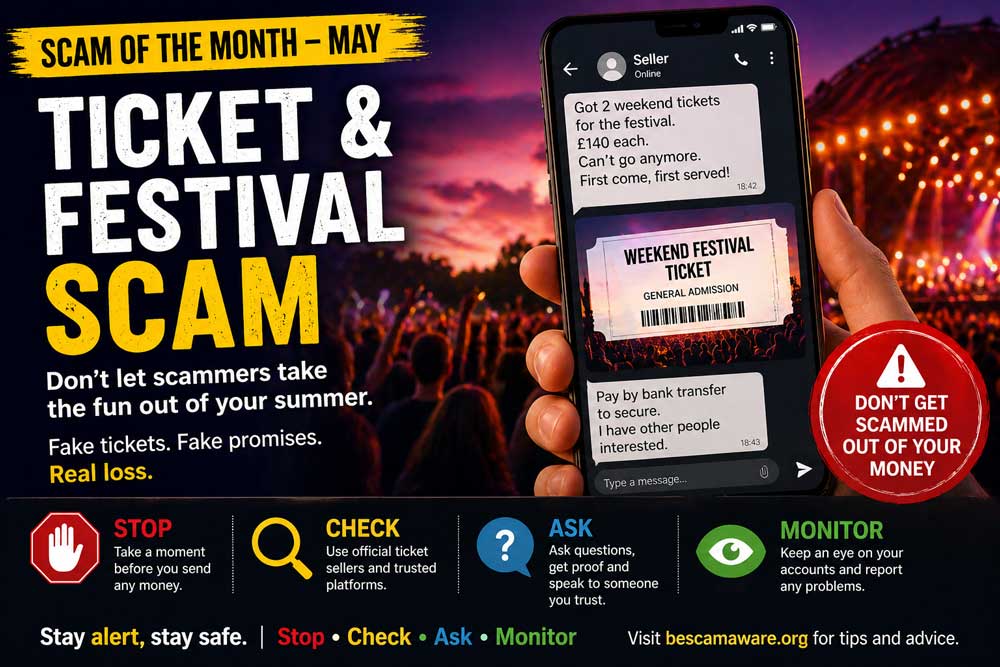

The Ticket & Festival Scam
As the weather improves and summer approaches, festival and event season begins. Tickets for concerts, festivals and live events sell out quickly, and many people turn to resale platforms or social media to secure a place.
Scammers know this.
Ticket scams increase sharply in late spring and early summer, when demand is high and availability is limited. What looks like a genuine opportunity to secure tickets can quickly turn into a loss of money with nothing in return.
How the scam works
It often starts with a simple post or message, someone claims to have spare tickets for a popular event. They may say they can no longer attend, or that a friend has dropped out. The tone is casual and believable, sometimes even friendly.
Photos of tickets or confirmation emails may be shared as proof. In many cases, these are fake, edited or reused from genuine listings.
The buyer is asked to transfer money directly, often through bank transfer or another non-refundable method, to secure the tickets quickly. Once payment is sent, the tickets never arrive, or they turn out to be invalid or already used.
In some cases, the scammer disappears entirely. In others, they continue to respond with excuses until communication stops.
Why this scam is so effective
Ticket scams work because they tap into normal behaviour, not unusual mistakes. Most people have experienced the pressure of trying to secure tickets for something popular, and scammers build their approach around that.
The fear of missing out on events
When a popular concert or festival sells out, it creates a strong sense of urgency. People don’t just want tickets, they don’t want to miss the experience, especially if friends are going or it’s something they’ve been looking forward to for months.
Scammers take advantage of this by presenting tickets as a rare opportunity. It might feel like a second chance after missing out during the official sale. In that moment, people are focused on securing the experience, not questioning the seller.
Limited ticket availability
Tickets for events are often genuinely limited, and people are used to seeing them disappear quickly. Messages like “only two left” or “I’ve had a lot of interest” feel completely normal in this context.
Because scarcity is expected, it doesn’t raise suspicion when a seller says tickets are about to go or that others are waiting. This makes it easier for scammers to create believable pressure without seeming unusual.
Trust in social media interactions
Many ticket scams happen on platforms people use every day. The seller might have a normal-looking profile, mutual friends, or a history of posts that make them appear genuine.
People are used to buying and selling items informally through social media, so a message offering tickets doesn’t feel out of place. A friendly tone, quick replies and casual conversation can build trust quickly, even if the account itself is fake or compromised.
The pressure to act before someone else buys
Scammers often introduce competition to speed up decision-making. They may say someone else is interested, that they’ve had multiple messages, or that they can’t hold the tickets without payment.
This creates a sense that hesitation will lead to missing out. People may skip basic checks, such as verifying the seller or questioning the payment method, because they feel they need to act immediately to secure the tickets.
Because all of this feels familiar, like something people have experienced before, it doesn’t immediately trigger suspicion.
That’s what makes it work.
The warning signs to watch for
Be cautious when buying tickets outside official platforms, especially if the seller insists on direct payment. Messages that create urgency, such as “first come, first served” or “I have other buyers waiting”, are designed to push quick decisions.
Images of tickets or confirmation emails should not be taken as proof. These can be easily faked or reused.
If the price seems unusually good for a sold-out event, or the seller avoids secure payment methods, it’s worth stepping back.
Protect yourself with Stop · Check · Ask · Monitor (SCAM)
STOP
Take a moment before sending money. If it feels rushed, that’s a warning sign.
CHECK
Use official ticket sellers or trusted resale platforms where possible. Avoid bank transfers to individuals.
ASK
Ask for verifiable proof, and consider whether the situation makes sense. If unsure, ask someone else before proceeding.
MONITOR
Keep track of your payments and accounts. If you’ve sent money and something feels wrong, contact your bank immediately.
A final reminder this May
Scammers don’t sell tickets.
They sell urgency and opportunity.
If someone is pushing you to act quickly or pay directly, take a step back.
BeScamAware – Stay alert, stay safe.
Stop · Check · Ask · Monitor
